Listen to this article
On October 29, 2025, at 15:41 UTC, Azure Front Door - the global edge that fronts a large share of Microsoft's own services and its customers' - began failing worldwide. It stayed degraded until 00:05 UTC the next day: 8 hours and 24 minutes of global disruption. Microsoft's post-incident review (tracking ID YKYN-BWZ) is now out, and it deserves a careful read, because the story it tells is not "we lacked safeguards." Microsoft had built exactly the safeguards everyone recommends. The PIR is the story of how both of them failed in the same month.
The blast radius was the kind only an edge layer can produce. Thirteen or more Azure services were affected, including the Azure Portal, App Service, and SQL Database - plus Microsoft 365, Dynamics 365, Entra ID, and Sentinel. Customers could not even open support cases, because support ran behind the same front door. Downdetector logged more than 30,000 reports in the first hour, and the disruption reached the physical world: airlines including Alaska Airlines reported operational impact.
How the safety net caught nothing
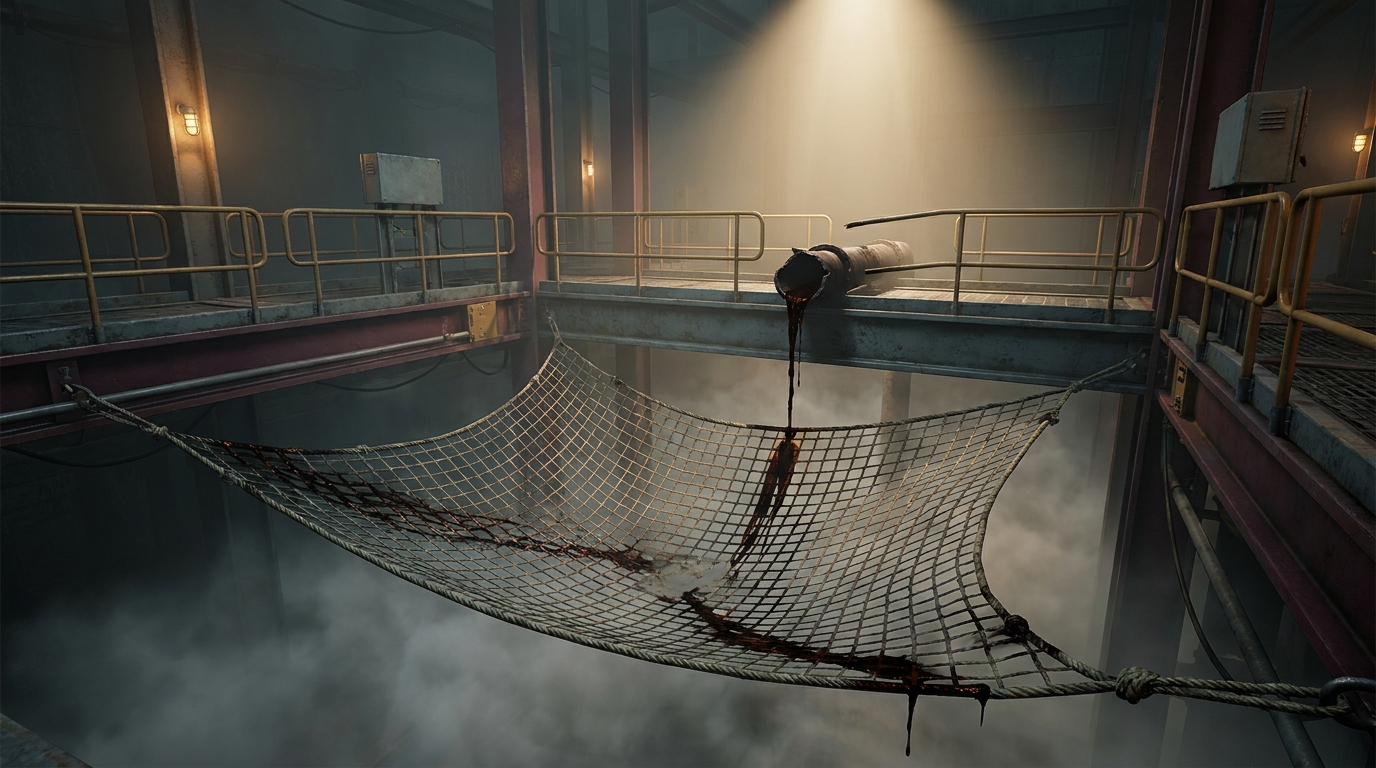
Per Microsoft's PIR, the root cause was a sequence of configuration changes made across two control plane build versions. Together they produced incompatible configuration metadata, which triggered a latent bug that crashed the data plane. The configuration protection system - the layer whose whole job is to stop a bad config from spreading - let it propagate. And then the failure that makes this incident a case study: the "Last Known Good" snapshot, the clean copy you roll back to when everything goes wrong, was itself updated with the corrupted metadata.
The rollback plan assumed the safety net was still clean. By the time anyone reached for it, the bad config had already soaked into the net.
Last Known Good is a genuinely good pattern. But it has a quiet dependency: something has to decide what counts as "good," and on October 29 that decision was made by the same automated pipeline that was propagating the corruption. The checkpoint validated itself. When a bad change and its own undo mechanism share a pipeline, you do not have a rollback plan - you have two copies of the failure.
The second failure, three weeks earlier
Here is what turns one incident into a pattern. On October 9 - twenty days before - a separate Azure Front Door outage (tracking ID QNBQ-5W8) ran 8 hours and 10 minutes. Its cause, per Microsoft: an automated protection layer was manually bypassed during a tenant cleanup operation. Two config-safeguard failures in one month, on the same service, with near-identical outage clocks - one safeguard switched off by a human, one defeated by the config it was meant to catch.
Oct 9 (QNBQ-5W8): 8 hours 10 minutes. Oct 29 (YKYN-BWZ): 8 hours 24 minutes. One safeguard bypassed by a person, one poisoned by the change itself.
Microsoft's fixes - and the shape they share
The PIR commits to real engineering: synchronous configuration processing, longer bake time between rollout stages, isolating configuration processing from traffic-serving instances by January 2026, and a backward-compatibility test framework by February 2026. All of it is sound. Notice the shape, though: each fix is another automated layer in the same pipeline. The October 9 incident already showed what happens to automated layers under operational pressure - a human switched one off to get a cleanup done. Layers help. Layers that can be bypassed by one person, or corrupted by the change they are checking, are not independent.
The AuthorityGate take
If the world's largest software company can have its config protection bypassed and its Last Known Good poisoned in the same month, the lesson is not "build a better single checkpoint." It is that single automated checkpoints fail, and they fail exactly when the change is bad, because the bad change is what they share a pipeline with. Change validation has to be layered and independent: gates that check a config against policy and compatibility before rollout, from outside the pipeline that ships it, with the reference copy of "known good" held where the change cannot touch it.
And the consequential gates need a person in them. Not a human rubber-stamping every config - a named human in the loop on the changes that can take down an edge network, with the authority to hold the rollout and no way to be "manually bypassed" without leaving a decision on the record. Both October incidents come down to the same missing property: at the moment the safeguard mattered most, nothing independent was standing behind it.
Microsoft's PIR is thorough, dated, and commendably specific about what broke. Read it, then ask the uncomfortable question of your own environment: if your worst config change shipped tomorrow, is your rollback target somewhere the change could reach? For eight and a half hours on October 29, Microsoft's answer was yes.
Sources
Go deeper
Every agent action, validated before it takes effect
AuthorityGate's newsletter breaks down real AI incidents and the governance failures behind them. Our configurable 8-gate validation model is how organizations keep a named human accountable for what their AI actually does.