
Business
Continuity
The cheapest outage is the one that never happens. Business continuity keeps your critical services running through disruption - by stopping the bad change before it lands, and confirming a rehearsed recovery path for anything that slips through.
What is business continuity?
Business continuity is an organization's ability to keep delivering its critical business services through disruption - outages, failed changes, bad updates, disasters. In IT terms it means the business keeps running, and recovers fast, when something goes wrong.
Change is the disruption most within your control: roughly 80% of unplanned outages come from operational changes, not attacks. Validating change before it reaches production is therefore one of the highest-leverage business-continuity controls available.
Continuity is decided before the outage, not during it
Most continuity planning focuses on recovery after an incident - backups, DR, failover. But the cheapest outage is the one that never happens. Keystone shifts continuity left - preventing the bad change or update from reaching production in the first place - while still ensuring a tested recovery path exists if anything slips through.
- Prevention Stops the outage-causing change before it reaches production.
- Recovery Confirms a rehearsed path back for anything that slips through.
Prevention plus rehearsed recovery is what continuity actually is.
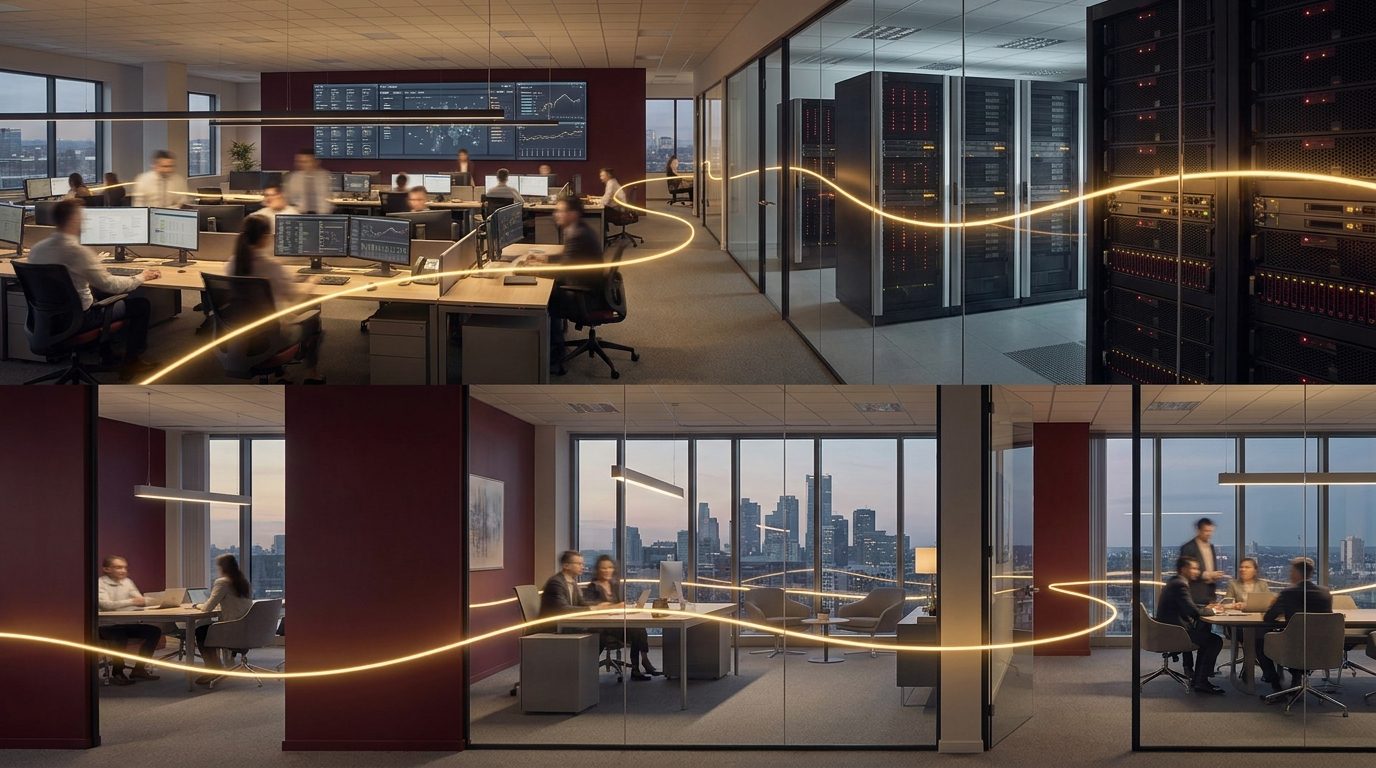
The disruption you can prevent is change
of unplanned outages are change-induced - not cyberattacks, but patches, updates, and configuration changes.
is how fast agentic AI now makes changes - far faster than humans can review before they reach production.
are pre-verified, not improvised - recovery is rehearsed and ready before any change executes.
The CrowdStrike outage was not an attack - it was an update. A single operational change crossed the gap between approval and production unvalidated, and the business stopped delivering its services worldwide. Business continuity is the discipline of making sure that change can't take you down: proven safe to run before it executes, with a tested recovery path ready in case it isn't.
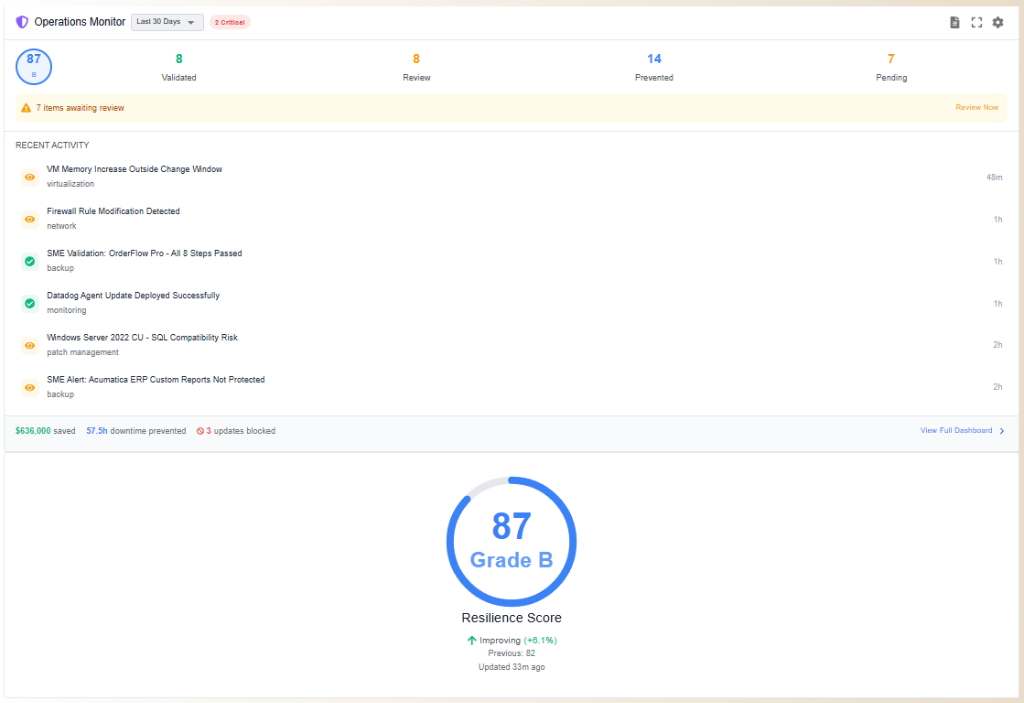
Prevention and recovery, gate by gate
Keystone's validation gates protect continuity from both ends - stopping outage-causing changes before they run, and confirming a rehearsed recovery path is ready for anything that slips through.
Maintenance-Window Enforcement
Changes land only when teams are ready - inside approved windows and never during org-wide freezes - so disruption never arrives when no one is there to respond.
Behavioral Test (Block Stack)
Runs the change in a production-mirroring lower environment and compares behavior against a baseline, catching outage-causing changes before they ever reach production.
Recovery Readiness
Confirms a tested rollback and recovery plan is ready before any change executes - so if something slips through, recovery is rehearsed, not improvised.
Verified Baseline & Backup
Verifies a known-good baseline and backup as the recovery target, so the path back to a working state is proven before anything changes.
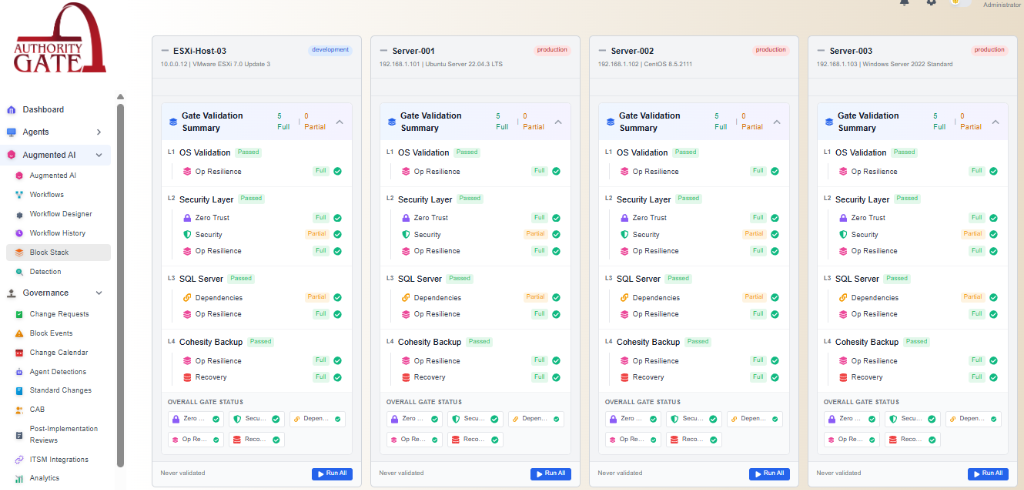
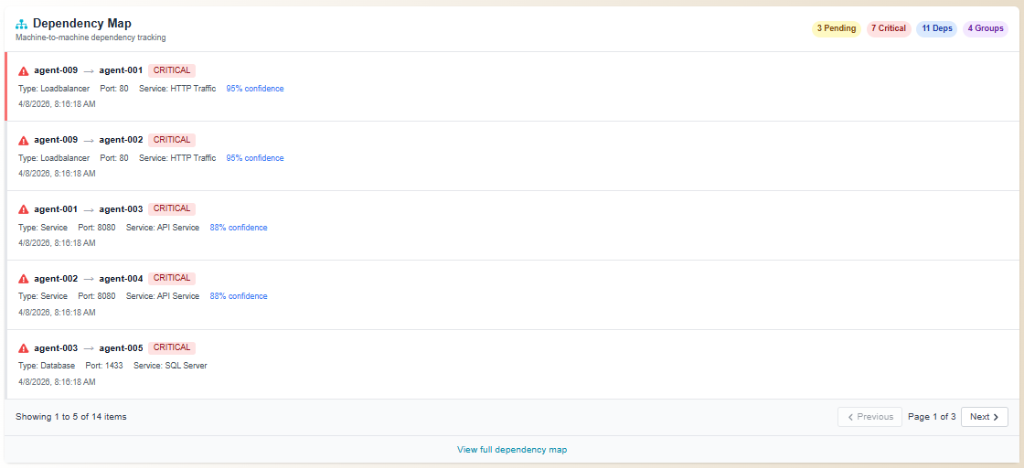
See how all eight gates work together in Change Validation.
The outcome that resilience produces
Business continuity sits on top of two foundations. Operational resilience keeps the business running through change - uptime and correct behavior. Data resilience keeps your data recoverable and intact - backup, integrity, restore.
Business continuity is the outcome those two produce together: critical services that keep delivering through disruption, and recover fast when they can't. Keystone delivers both foundations - so continuity stops being a plan on a shelf and becomes a property of how change reaches production.
Business continuity, answered
What is business continuity in IT?
Business continuity is an organization's ability to keep delivering its critical business services through disruption - outages, failed changes, bad updates, and disasters. In IT terms it means the business keeps running, and recovers fast, when something goes wrong. Change is the disruption most within your control: roughly 80% of unplanned outages come from operational changes, not attacks. Validating change before it reaches production is therefore one of the highest-leverage business-continuity controls available.
How is business continuity different from disaster recovery?
Disaster recovery is one part of business continuity - the recovery part. It answers "how do we get back online after an incident?" through backups, failover, and DR runbooks. Business continuity is the broader outcome: keeping critical services delivering through disruption in the first place, and recovering quickly when they can't. The cheapest outage is the one that never happens, so true continuity pairs prevention - stopping the bad change before it lands - with a tested recovery path for anything that slips through.
How does change validation improve business continuity?
Because change is the disruption you can prevent. Around 80% of unplanned outages are change-induced, and agentic AI now makes changes faster than humans can review them. Validating every change before it reaches production stops outage-causing changes at the door instead of recovering from them afterward. That shifts continuity left - from improvised recovery during an incident to prevention before one - while still confirming a rehearsed recovery path exists for the rare change that gets through.
How does Keystone reduce downtime?
Keystone validates the continuity impact of every change before it executes. Gate 2 enforces approved maintenance windows so changes land only when teams are ready; Gate 6 runs the change through the Block Stack behavioral test to catch outage-causing changes before production; Gate 8 confirms a tested rollback and recovery plan is ready before any change runs; and Gate 1 verifies a known-good baseline and backup as the recovery target. Prevention plus rehearsed recovery means downtime is avoided where possible and short where not.
Make continuity a property of every change
Business continuity is one capability of AuthorityGate Keystone. Join the invitation-only Founding Members Early Access Program and stop change-induced outages before they happen.