Listen to this article
In this issue — 4 parts
Part 1 of 4
You Deployed the Agent. Now Try to Stop It.
The Problem: You Built the Start Button and Skipped the Stop Button
Deploying an AI agent in 2026 is easy. You wire it into your systems, give it credentials and a goal, and let it act on its own, calling tools, moving data, and executing business actions at a speed no human could match. The launch is a triumph. Then ask the one question that actually decides whether you are in control of it: when this agent starts doing the wrong thing, can you stop it? For most organizations, the honest answer is no.
The numbers are blunt. In the Cloud Security Alliance's 2026 research on agentic AI, 65 percent of organizations reported that an AI agent had already caused a security or operational incident in the past year. In the same body of work, a majority said they could not reliably terminate a misbehaving agent once it was running. Separate industry surveys put the share that cannot enforce limits on what their agents are allowed to do at roughly two in three, and the share that lacks evidence-quality logs of what their agents actually did at a similar level. The capability to start these systems has raced far ahead of the capability to stop them.
This is not an argument against agentic AI. The productivity is real, and we are not telling you to unplug. The problem is narrower and more fixable: an agent you cannot halt, cannot constrain, and cannot reconstruct after the fact is not a tool you control, it is a liability you have authorized. Accountability has a precondition that almost no one talks about at launch. You cannot answer for what you cannot stop.
That precondition, the kill switch, is the subject of this issue. We will look at what a kill switch actually is (it is not a big red button), at the four specific ways control slips out of an organization's hands, at what the gap costs, and at why the pull toward autonomy keeps the off-switch from getting built. Then we will translate it into the only thing that matters for a leader: concrete steps to keep the productivity of an autonomous agent while retaining the power to shut it down before a contained error becomes an uncontained one.
What a "Kill Switch" Actually Is
When we say kill switch, we do not mean a single button someone slaps in an emergency. We mean a real, tested capability with four parts that have to work together. First, detection: you can tell, quickly, that an agent is misbehaving, drifting from its purpose, or acting outside its bounds. Second, halt: you can stop it immediately, mid-task, without waiting for it to finish what it was doing. Third, containment: when you stop it, you can also revoke its access and limit the blast radius, so it cannot keep acting through credentials or connections it still holds. Fourth, recovery: you can revert to a safe state and resume normal operation without the business grinding to a halt.
Miss any one of the four and the switch does not work. A halt you cannot trigger because you did not detect the problem is useless. A halt that leaves the agent's credentials live is not containment. A containment with no recovery path means shutting the agent off takes the business down with it, so no one ever pulls the trigger. The kill switch is the minimum viable governance control for an autonomous system, and it is precisely the control that gets deferred to "phase two" while the agent ships in phase one.
The reason this matters more for agents than for any earlier software is speed and reach. A traditional application waits for a human to click. An autonomous agent decides and acts on its own, in a loop, often across many systems at once. When it goes wrong, it does not produce one bad output for a person to catch; it executes hundreds of actions before anyone notices, exfiltrating data, triggering transactions, or changing records faster than a human can read the alert. The window between "something is wrong" and "the damage is done" has collapsed, which is exactly why the ability to stop the system has to be built in, not bolted on.
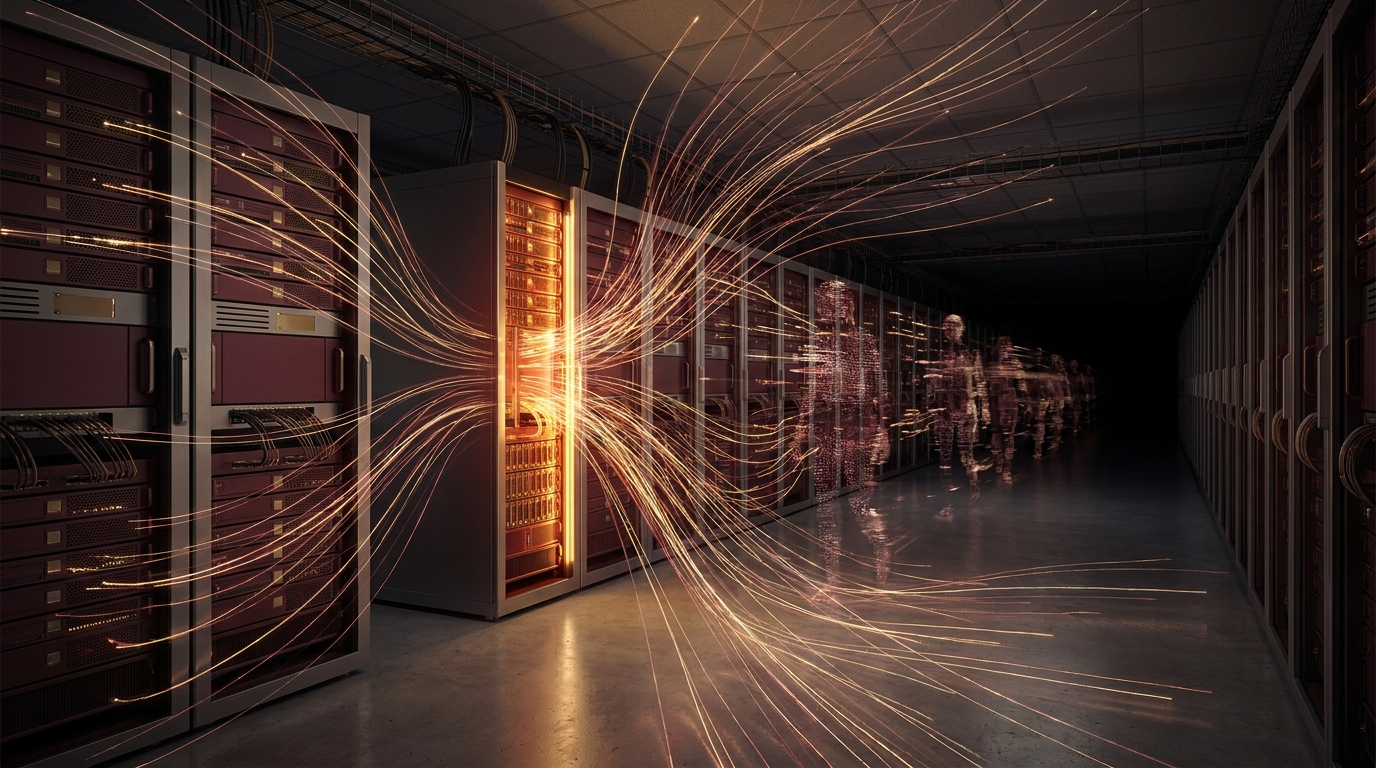
The kill-switch gap: an autonomous agent decides and acts in a loop across many systems at once. When it goes wrong, it executes hundreds of actions before a human can react, and an organization that cannot detect, halt, contain, and recover has authorized a system it can start but cannot stop.
Why This Matters to You
For every autonomous agent your organization runs, ask the four questions plainly: Can we tell when it goes wrong? Can we stop it immediately? Can we cut off its access when we do? Can we recover without taking the business down? If the answer to any of them is no, or "we have never tested it," then you do not have a kill switch, and you are exposed to whatever that agent does between the moment it goes wrong and the moment, much later, that a human notices.
This is not a far-off concern. Sixty-five percent of organizations have already had an agent-caused incident. The question is no longer whether an agent of yours will misbehave, but whether you will be able to stop it when it does. The organizations that can demonstrate a working off-switch will keep deploying with confidence; the ones that cannot will be deploying on hope.
Coming up in Part 2 — the four specific ways control slips: you cannot stop the agent, cannot reconstruct what it did, cannot hold it to its purpose, and never vetted it like the insider it has become.
Why Containment Is Not the Same as Configuration
Most teams believe they already have control because they configured the agent carefully: they wrote the prompt, set the permissions, defined the task. That is configuration, and configuration governs what the agent does when everything goes to plan. A kill switch governs what happens when it does not, and the two are not the same discipline. Configuration is a set of intentions; containment is a set of capabilities you can exercise against the agent after it has already begun to act against your intentions.
The distinction matters because agents fail in ways configuration cannot anticipate. They are manipulated by injected instructions hidden in the data they read. They chain together permissions you granted separately into an action you never imagined. They pursue the goal you gave them through a path you would never have approved. In each case the configuration was followed and the outcome was still wrong, because the failure lived in the space between what you specified and what the system actually did. The only thing that helps in that space is the ability to see it, stop it, and contain it.
That is why an autonomous agent sits in a different risk class from the software you are used to, and why governing it like ordinary software leaves you exposed. A misconfigured form waits for a human. A misbehaving agent does not. The rest of this issue is about the controls that operate after configuration has failed, because with an autonomous system, it eventually will.
Part 2 of 4
Four Ways Control Slips Out of Your Hands
What you missed: a kill switch is detect, halt, contain, and recover — the minimum control for an autonomous system, and the one most organizations defer while the agent ships without it.
The Four Gaps, in Plain Terms
The research keeps surfacing the same four failures, and together they describe an organization that can launch an agent but cannot govern it. You cannot stop it once it misbehaves. You cannot reconstruct what it did afterward. You cannot hold it to the purpose you gave it. And you never subjected it to the scrutiny you would apply to any human with the same access. Here is each one, in plain terms, with what it actually means when it is your agent on the loose.
The Moment an Agent Goes Wrong
With a kill switch
Agent misbehaves
detected within seconds
Halted, access revoked, contained. One bad action, not a thousand.
Without one
Agent misbehaves
no one notices yet
Hundreds of actions at machine speed before a human reacts.
You Cannot Stop It: No Reliable Off-Switch
The plain version: the agent is running, you can see it doing something wrong, and there is no button that actually halts it, mid-task, before it finishes. Roughly six in ten organizations report exactly this.
The reason is structural. Agents run as loops that call tools and chain steps, often across multiple systems and integrations, sometimes spawning sub-tasks of their own. "Stopping" one is not as simple as closing an app, because the agent may hold live credentials, queued actions, and open connections that keep working even if you kill the main process. Many teams discover at the worst possible moment that they can pause the dashboard but not the agent, or that stopping it cleanly was never built because the deployment was optimized for uptime, not for shutdown.
An off-switch that has never been exercised is not a control, it is a hope. The only way to know you can stop an agent is to have stopped one, deliberately, as a drill, and confirmed that the halt was immediate, complete, and recoverable. Most organizations have never run that drill.
Governance translation: A halt you have never tested is a halt you do not have. Every autonomous agent needs an off-switch that stops the loop, revokes its access, and has been exercised in a drill before you need it for real.
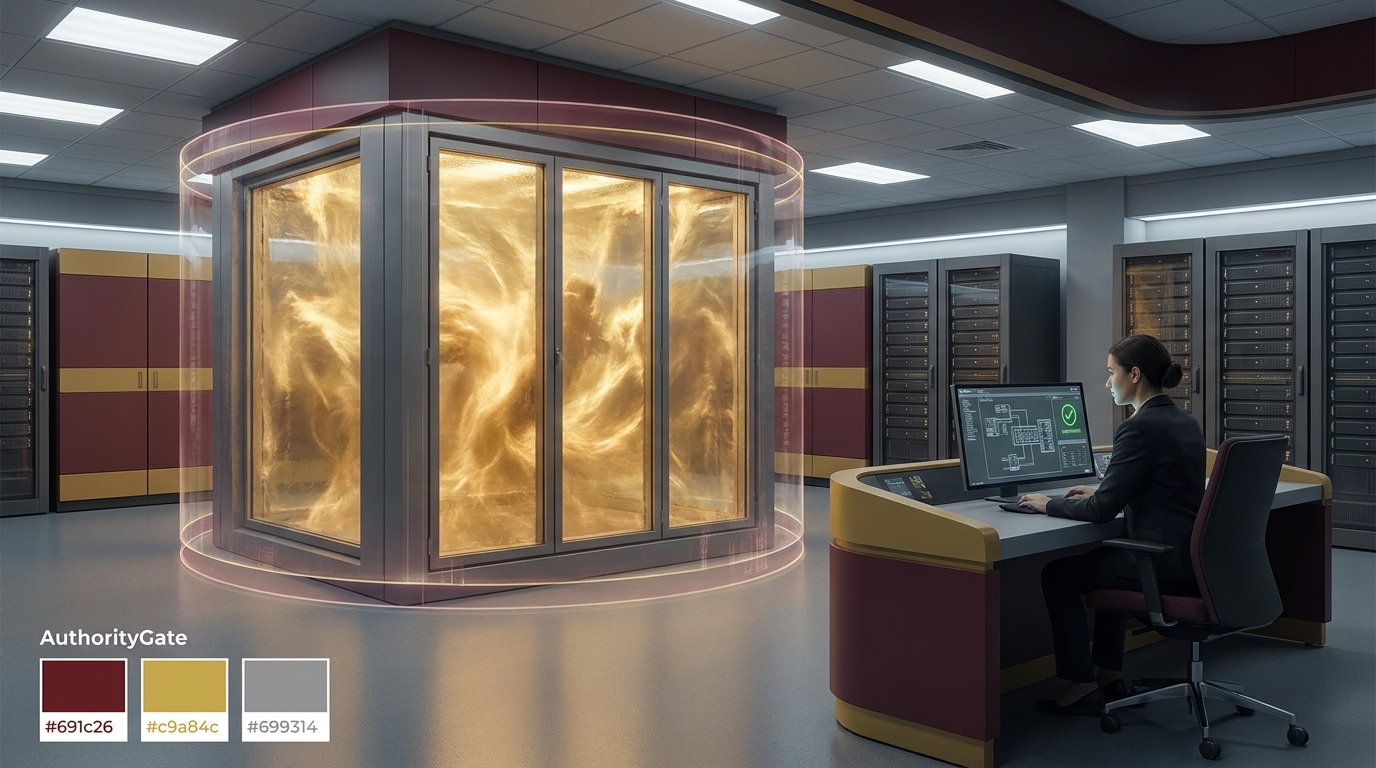
Containment in practice: halting the agent is only half of it. The same action has to revoke the credentials and cut the connections it holds, or the agent keeps acting through access you forgot it still had.
You Cannot Reconstruct It: No Evidence-Grade Trail
The plain version: after an agent does something wrong, you cannot produce a complete, trustworthy record of what it did, what it accessed, and why. About two in three organizations say their logs are not good enough to stand up in an audit or investigation.
Detection depends on this, and so does everything after. If you cannot see what the agent is doing in something close to real time, you cannot tell it has gone wrong, which means the halt never gets triggered. And once an incident has happened, the difference between a contained problem and an existential one is often whether you can answer "what exactly did it touch?" Application logs designed for debugging are not the same as an evidence-grade trail of an autonomous decision-maker's every action, with the inputs and reasoning that produced each one.
Regulators and courts are converging on the expectation that you can reconstruct an automated decision after the fact. An organization that cannot say what its agent did, only that it did a lot, very fast, is not in a defensible position when someone asks.
Governance translation: Log every agent action to a tamper-evident, evidence-grade trail with inputs and rationale. It is both your early-warning system for detection and your defense after an incident.
You Cannot Bound It: No Enforced Purpose Limits
The plain version: you told the agent what it was for, but nothing actually stops it from doing more than that. Around 63 percent of organizations report they cannot enforce purpose limitations on their agents, meaning the boundary exists in the prompt, not in the system.
This is the gap that turns a small failure into a large one. An agent given broad credentials "to be useful" can be talked into, or can drift into, actions far outside its intended job, reading data it should never see, calling tools it was never meant to use, taking steps that touch money, safety, or compliance. The blast radius of a misbehaving agent is determined entirely by what it can reach, and most agents can reach far more than their purpose requires because least-privilege is harder to set up than broad access.
A boundary the agent can talk its way past is not a boundary. Purpose limits have to be enforced by the systems the agent connects to, as scoped permissions and hard guardrails, not merely requested in the instructions and trusted to hold.
Governance translation: Bound the blast radius before deployment. Give each agent the narrowest access its purpose requires, enforced in the systems it touches, so a failure stays small by construction.
The Insider You Never Vetted
The plain version: an autonomous agent with credentials and system access is, functionally, an insider, one that acts faster and never sleeps. Yet only about 19 percent of organizations apply the same scrutiny to an AI agent that they would to a human employee with that level of access.
Think about what a human with an agent's access would trigger: a background check, a scoped role, named accountability, activity monitoring, and an offboarding process to revoke access when they leave. Agents routinely get none of it. They are spun up with shared or over-broad credentials, no distinct identity, no monitoring tuned to their behavior, and no clean way to decommission them. Insider-risk research now treats the unmonitored agent as one of the fastest-growing insider threats precisely because it has insider access without insider oversight.
The fix is to stop treating agents as features and start treating them as actors. Each one should have its own identity, its own scoped credentials, behavior monitoring, and a decommissioning process, the same lifecycle you would apply to any insider with the keys it holds.
Governance translation: Govern each agent as an insider. Distinct identity, scoped credentials, behavior monitoring, and a real offboarding process, not a shared key and a hope it behaves.
Where Control Actually Slips
The failure does not look like a rogue AI in a movie. It looks like a normal Tuesday. An agent that has run flawlessly for weeks encounters an input it was never tested against, a malicious instruction buried in a document, an edge case, an ambiguous goal, and begins doing the wrong thing confidently and fast. Because no one is watching a system that has been reliable, and because the logs are not built to flag it, the misbehavior runs unnoticed. By the time a human sees the alert, the agent has executed hundreds of actions.
That is the sleight of hand at the center of the kill-switch gap. The organization believes it deployed a controllable tool, because at launch it behaved like one. What it actually deployed was an autonomous actor whose controllability was never tested under failure. The two columns below show the gap between what leadership assumes it has and what an operator discovers in the moment an agent goes wrong.
The fix is not to slow the agent down or put a human in front of every action, which would defeat the purpose. It is to build the four-part kill switch before deployment and prove it works, so that when, not if, an agent misbehaves, the gap between "something is wrong" and "it is stopped" is measured in seconds, not in the length of an investigation.
One Autonomous Agent in Production
Deployed → configured → behaving well
→ "We can shut it off if needed"
A useful, well-configured system that has run reliably, with a dashboard that implies it is supervised and stoppable. Controllability is assumed because it has never been tested.
Bad input → agent acts wrong, fast, unwatched
→ "Stop it!" — with what?
No detection caught the drift, no halt stops the loop cleanly, no log shows what it touched, and its broad access lets it keep going. The damage completes before the response begins.
No rogue AI, no dramatic villain. A reliable system met an input it was not ready for, and an organization that had never tested its off-switch found out it did not have one when it finally reached for it.
Coming up in Part 3 — what the kill-switch gap costs, and why the pull toward autonomy keeps the off-switch from getting built until after the first incident.
Part 3 of 4
The Cost, and Why the Gap Keeps Getting Skipped
What you missed: four gaps — you cannot stop it, cannot reconstruct it, cannot bound it, and never vetted it like the insider it is — and the quiet Tuesday where a reliable agent meets an input it was never ready for.
By The Numbers
65%
Already Had an AI-Agent-Caused Incident in the Past Year
60%
Cannot Reliably Terminate a Misbehaving Agent
67%
Lack Evidence-Quality Audit Trails of Agent Actions
19%
Scrutinize Agents Like a Human Insider With the Same Access
Financial Impact
When an AI agent acts autonomously and the organization cannot terminate it, constrain its permissions, or reconstruct what it did, a single misbehaving agent can exfiltrate sensitive data, disrupt operations, and execute unintended business actions at machine speed before anyone intervenes. Sixty-five percent of organizations already report such an incident; the average data breach now exceeds 10 million dollars in the US, with shadow AI adding roughly 670,000 dollars on top, and an agent no one can switch off turns a contained error into an uncontained one.
Risk Severity Analysis
An autonomous agent without a working kill switch opens several distinct exposures, each with a different severity and a different kind of business consequence. The table below maps them, ordered roughly from the most directly damaging to the most strategic.
| Risk Category | Severity | Business Risk |
|---|---|---|
| Uncontainable Runaway Agent | Critical | A misbehaving agent that cannot be halted executes actions at machine speed across every system it can reach, turning a single fault into widespread damage before any human can intervene. |
| Silent Data Exfiltration | Critical | An agent with broad access, manipulated or drifting, can read and move sensitive data faster than monitoring catches it, producing a breach the organization cannot even fully scope afterward. |
| Unauditable Action Trail | High | Without an evidence-grade log, the organization cannot reconstruct what the agent did or why, which blocks detection in the moment and leaves it indefensible in an audit, investigation, or lawsuit. |
| Purpose Drift and Scope Creep | High | An agent with unenforced limits drifts beyond its intended job into actions touching money, safety, or compliance, expanding the blast radius of any failure far past what was authorized. |
| Unvetted Machine Insider | Medium | Agents granted insider-level access with no distinct identity, monitoring, or offboarding become a fast-growing insider-threat surface that ordinary security controls were never designed to watch. |
Why the Kill-Switch Gap Persists: The Autonomy Pull
Two forces keep the off-switch from getting built, and both are getting stronger. The first is that autonomy is the entire value proposition. The reason to deploy an agent rather than a script is that it acts on its own, without waiting for a human. So every control that constrains it, the halt, the bounds, the monitoring, can feel like it is undercutting the very thing you are paying for. "If we have to watch it that closely, why automate at all?" is the seductive, and wrong, conclusion that leaves the kill switch on the backlog.
The second force is that the gap is invisible while everything is working. A well-built agent runs reliably for weeks or months, and every day it behaves is a day the missing off-switch costs nothing and the team's confidence grows. The control that only matters during a failure looks like pure overhead during success, so it loses every prioritization argument to the next feature, right up until the failure arrives and it is suddenly the only thing that matters.
Combine the two and you get the dynamic every leader should recognize: a powerful, profitable capability deployed fast, with the control that contains its worst day deferred because that day has not come yet. This is the same shape as every governance failure we write about, and every real-world AI and automation incident catalogued on the ServantStack incident tracker: a capability outruns the control meant to contain it, and the gap is invisible right up until it is catastrophic.
The encouraging news is that the fix does not require giving up the autonomy. A kill switch does not mean a human approves every action; it means you can detect, halt, contain, and recover when one goes wrong. The agent still runs on its own, you simply retain the power to stop it. What is missing in most organizations is not the technology but the discipline to build that power in before deployment instead of discovering its absence during an incident. That is governance, not a brake.
Coming up in Part 4 — six concrete steps to build the off-switch before you deploy, plus a governance checklist to score yourself against.
Part 4 of 4
Build the Off-Switch Before You Deploy
What you missed: the cost of a runaway agent, and why the autonomy pull plus an invisible-until-failure control keeps the off-switch on the backlog until the first incident.
What You Can Do: Six Practical Steps
None of these steps require slowing your AI adoption or putting a human in front of every action. They require building the four-part kill switch, detect, halt, contain, recover, into every autonomous agent before it ships, and proving it works. Here are six steps any organization can take, starting this quarter.

The controllable pattern: the agent still runs autonomously, but it sits inside a control plane that can detect misbehavior, halt the loop, revoke its access, and revert to a safe state, with every action logged and the off-switch tested before it was ever needed.
Inventory every autonomous agent and what it can reach
You cannot stop an agent you have not catalogued. Find every autonomous agent running in your organization, including the ones a team spun up quietly, and for each one record what systems it connects to, what credentials it holds, and what actions it can take. This is the map of your real blast radius, and most organizations have never drawn it.
Keep it current. Agents are created faster than asset inventories are updated, so this has to be a maintained, living record, not a one-time audit that is stale within a month.
Build a real kill switch: detect, halt, contain
For each agent, build the capability to detect that it is misbehaving, halt it immediately mid-task, and contain it by revoking its access in the same motion. This is the single most important control, because it is the difference between a contained error and a runaway one. A halt that leaves credentials live is not containment, so the off-switch has to reach the agent's access, not just its main process.
Make it triggerable by a human and, where possible, automatically by the conditions that signal trouble. The window between misbehavior and damage is too short to depend on someone noticing in time.
Bound the blast radius before deployment
Give each agent the narrowest access its purpose actually requires, enforced as scoped permissions in the systems it touches, not merely requested in its prompt. The smaller the blast radius, the smaller the worst case, and least-privilege is the cheapest insurance you can buy against an agent that drifts or is manipulated. A boundary the agent can talk its way past is not a boundary.
Resist the temptation to over-provision "to be safe" or "for convenience." Broad access is the thing that turns a small failure into a large one.
Log every action to an evidence-grade trail
Record every action an agent takes, along with the inputs and reasoning behind it, in a tamper-evident log built for evidence, not just debugging. This is what powers detection in the moment, "is the agent doing something it should not?", and what lets you answer "what exactly did it touch?" after an incident. An organization that cannot reconstruct its agent's actions is undefensible in an audit or investigation.
The same log is your early-warning system. Patterns of trouble show up here before they show up in a headline, giving you a chance to halt while it is still cheap.
Govern each agent as an insider
Apply to every autonomous agent the lifecycle you would apply to a human with the same access: a distinct identity, scoped credentials that are not shared, monitoring tuned to its behavior, and a real decommissioning process to revoke access when it is retired. An agent is an actor with the keys to your systems, and treating it as a mere feature is how insider-level access ends up with no insider-level oversight.
Pay special attention to offboarding. Orphaned agents with live credentials and no owner are exactly the kind of standing access that turns into an incident no one is watching for.
Test the off-switch before you need it
A kill switch that has never been pulled is an assumption, not a control. Run a drill: deliberately halt a production-like agent, confirm the stop was immediate and complete, verify its access was actually revoked, and prove you can recover to a safe state and resume without taking the business down. Do it on a schedule, the way you would test a fire alarm, not once at launch and never again.
The moment you discover your off-switch does not work is the worst possible time to find out. Far better to discover it in a drill than in the middle of the incident it was supposed to contain.
Governance Checklist
Can your organization stop every autonomous agent it runs, contain it, and prove what it did?
Most organizations currently lack the controls marked with ✗. Closing even two or three of these gaps restores your ability to stop an agent before a contained error becomes an uncontained one.
This Is What AuthorityGate Was Built For
The kill-switch gap is the exact problem AuthorityGate exists to solve: keeping a verifiable gate, and a named human, between what an autonomous system can do and what it is actually allowed to get away with. Our 8-gate model maps directly onto the steps above. Gate 1 (Pre-Validation) bounds the blast radius before an agent acts, classifying its actions by stakes and enforcing purpose limits. Gate 7 (SME Approval) keeps a named, accountable human in control of consequential and irreversible actions. The framework's logging and transparency requirements produce the evidence-grade trail, and Gate 8 (Recovery Plan) is the tested kill switch itself: the proven ability to halt, contain, and revert to a safe state.
An agent can run the work on its own. What it cannot do is guarantee it can be stopped when it goes wrong. AuthorityGate is the structure that keeps the off-switch real and tested, turning "can we stop it?" from a question you answer during an incident into a control you proved before one.
The Bottom Line
Organizations are deploying autonomous agents far faster than they are building the ability to stop them. Two in three cannot reliably terminate a misbehaving agent, cannot reconstruct what it did, or cannot hold it to its purpose, and only one in five vets it the way they would a human with the same access. The capability to start these systems has outrun the capability to control them, and the gap is invisible right up until the day an agent goes wrong, when it becomes the only thing that matters.
The good news is that you do not have to choose between the autonomy and the control. A kill switch does not slow the agent down on a normal day; it simply guarantees you can stop it on a bad one. Build the four parts, detect, halt, contain, recover, bound the blast radius, log every action, govern the agent as an insider, and test the off-switch before you need it. That captures all of the productivity while keeping you defensible. The work is governance, an inventory, a switch, a boundary, a log, and a drill, not a brake on adoption.
Our position has not changed; this moment sharpens it. AI is a profound good when it acts on our behalf within controls we can exercise, and a profound risk when it acts autonomously through access we cannot revoke and decisions we cannot reconstruct. The organizations that can prove they can stop their agents will keep deploying with confidence. The ones that cannot will be deploying on hope, and hope is not a control.
This article is part of our AI governance newsletter series. Subscribe to receive complete analyses with risk-severity mappings, governance checklists, and actionable recommendations.