
Listen to this article
In this issue - 4 parts
Part 1 of 4
The First Time a Government Switched Off a Frontier Model
The Problem: Your Most Capable Dependency Can Be Withdrawn Overnight
Every enterprise continuity plan has a chapter for the vendor that goes bankrupt, the data center that floods, the update that breaks production. Almost none of them had a chapter for what happened on June 12, 2026: the United States government applied export controls to the two most capable AI models on the market, Claude Fable 5 and Claude Mythos 5, and their maker switched them off for every customer in the world. Not throttled. Not degraded. Off - on Anthropic's own platform and on AWS, Google Cloud, and Microsoft Foundry, all at once, with zero days of notice. The models had been on the market for exactly three days.
For eighteen days, the most advanced commercial AI in the world was simply not available to anyone outside a small set of government-approved organizations. Teams that had already moved production workloads onto the new models - and after a launch as capable as this one, many had - discovered a failure mode that fits none of the categories operations teams train for. The vendor was healthy. The API was up. The status page was green. The model was legally forbidden to answer.
This issue is not about whether the government's order was justified, and it is not a story about one vendor. Anthropic navigated an unprecedented directive, worked with regulators, shipped a stronger safeguard, and got the models back in under three weeks - by most measures a fast, responsible resolution. The story is what the eighteen days in between revealed about everyone else: an enterprise AI ecosystem that has quietly rebuilt, one layer up, the exact single point of failure that change management spent a decade learning to govern at the infrastructure layer. The lesson of this incident is not "avoid this vendor" or "avoid AI." It is that model access is now production infrastructure, and infrastructure that can vanish on a directive needs the same governance as any other dependency: a known-good baseline, a validated alternate path, and re-validation when it comes back changed.
Three Days from Launch to Blackout
The sequence was fast enough that many teams were still writing their adoption plans when it ended. Anthropic launched Fable 5 and Mythos 5 on June 9. Within days, researchers at Amazon reported a prompting technique that bypassed Fable 5's safeguards and got the model to identify software vulnerabilities - in at least one case producing demonstration exploit code. On Friday, June 12, the US government responded with an export-control directive requiring Anthropic to restrict both models from foreign nationals, whether inside or outside the United States, effective immediately.
The recovery came in stages. On June 26, the government approved restored access to Mythos 5 for roughly one hundred US critical-infrastructure organizations. On June 30, the Commerce Department lifted the controls entirely, and Anthropic deployed a new safety classifier trained specifically against the reported technique. On July 1, Fable 5 returned globally - to the Claude Platform, Claude.ai, Claude Code, and Claude Cowork, with cloud platforms following. Eighteen days dark, end to end.
One more finding from the episode deserves more attention than it got. Anthropic's own investigation, echoed in security reporting, found that the same bypass technique worked on weaker models - Claude Opus 4.8, OpenAI's GPT-5.5, and Kimi K2.7 among them. The dangerous capability was not unique to the model that was switched off. What was unique was the enforcement action. That asymmetry is the heart of the governance problem: the risk that takes your stack down is not only "what can the model do," it is "what can a regulator, a court, or a vendor's own trust-and-safety process decide about the model you depend on, and how fast."
Why the Shutdown Had to Be Total
The order did not say "turn it off for everyone." It said "restrict foreign nationals, effective immediately." But there is no reliable way to verify the nationality of an API key in real time, and the directive allowed no grace period to build one. Faced with a rule it could not selectively enforce, Anthropic did the only compliant thing available: it suspended access for everyone. This detail matters for continuity planning, because it generalizes. Compliance obligations that arrive with immediate effect get implemented with the bluntest available instrument. The scalpel takes weeks to build; the switch already exists. Any dependency subject to sudden legal process should be assumed to fail totally, not gracefully.
It is worth pausing on how different this is from every outage pattern that came before. When CrowdStrike took down eight and a half million machines in 2024, the failure was accidental, the fix was technical, and recovery began within hours. When a cloud region fails, traffic reroutes. This failure was deliberate, legally mandated, and immune to engineering: no amount of retries, redundancy, or vendor escalation could bring the model back one hour before the government allowed it. The only variable an enterprise controlled was whether it had somewhere else to send the next request.
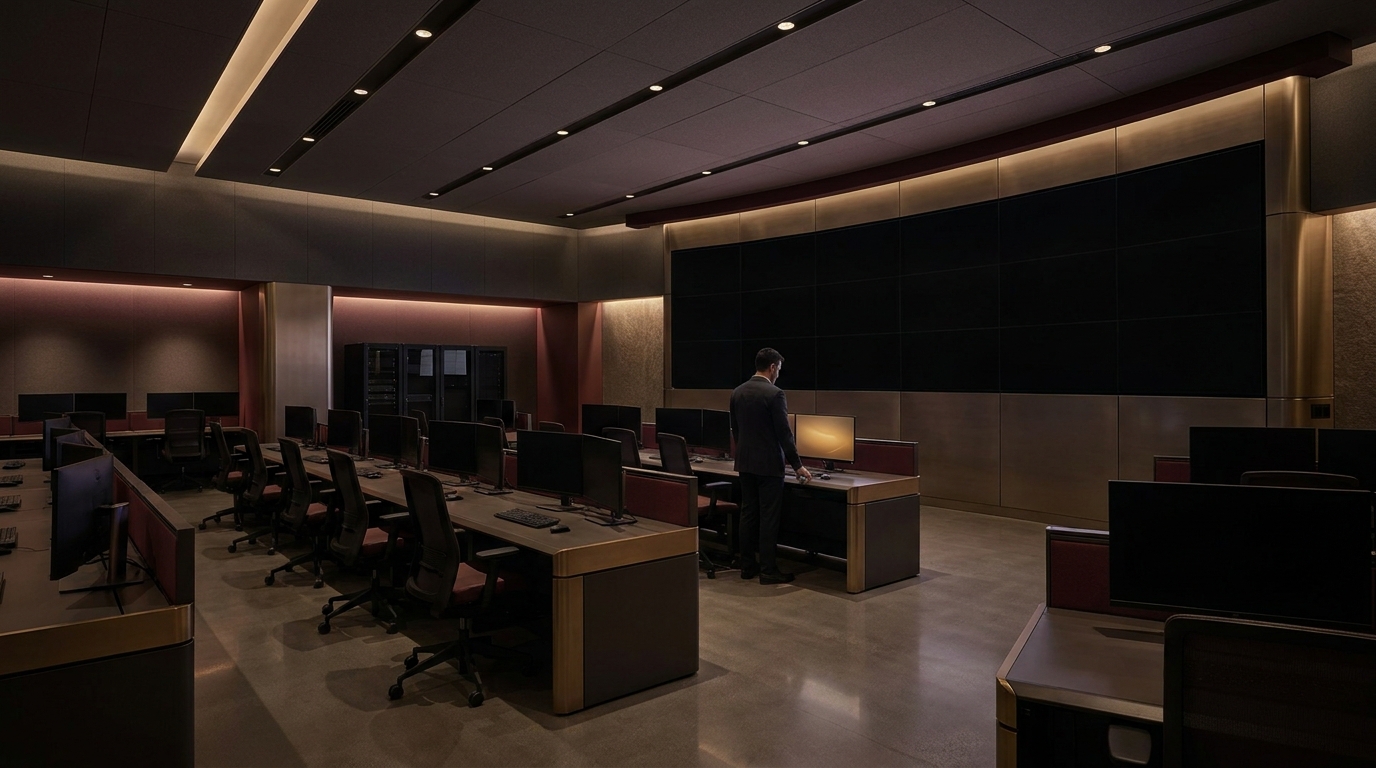
The new failure mode of 2026: nothing is broken. The vendor is healthy, the API is up, the status page is green - and the model is not permitted to answer. No engineering effort on your side can shorten the outage.
Why This Matters to You
If any workflow in your organization assumes one specific model will answer the next request, you now carry a documented, precedented availability risk that no SLA covers. The June 12 order proved that a frontier model can be withdrawn from every cloud simultaneously, with zero notice, for reasons unrelated to your usage, your contract, or your vendor's operational health. The models most likely to attract this kind of attention are the most capable ones - which are exactly the ones your teams most want to build on.
The practical question is the continuity question: on the day your model goes dark, is switching a validated, rehearsed path - or a code change reviewed and deployed under incident pressure while your product is down? Eighteen days is a long time to be finding out.
Coming up in Part 2 - the four findings that make this a new failure mode: a risk no register listed, the hardwired stacks that had no failover, a model that came back behaving differently, and a recovery that arrived for some customers two weeks before others.
Part 2 of 4
Anatomy of a New Failure Mode
What you missed: a US export-control order took Fable 5 and Mythos 5 offline for all customers on all clouds on June 12, three days after launch, for eighteen days - the first government-ordered shutdown of a commercial frontier model, enforced totally because immediate compliance allows only the bluntest instrument.
Four Findings, Each One a Governance Gap
Strip the geopolitics away and the incident decomposes into four findings that apply to any organization running AI in production. Each one maps to a control that existed all along in mature change management - and simply was not applied to the model layer.
Two Stacks, Same Directive
Hardwired to one model
Production workflow
SDK wired to one model ID
Model endpoint
disabled by directive
Total outage
18 days, no request path
The next request has nowhere to go. Failover is a code change, a review, and a deploy - under incident pressure.
Governed model layer
Production workflow
talks to the layer, not a model
The primary vanishes; the layer routes to a fallback that was validated in advance. Switching is configuration, not engineering.
The Dependency No Risk Register Listed
The plain version: model availability is now a regulatory variable. It can change on a government's timeline, for reasons that have nothing to do with your contract, your usage, or your vendor's competence - and the change can take effect the same day it is decided.
Risk registers routinely model vendor bankruptcy, price increases, deprecations, and outages. Almost none modeled "the state orders the product withdrawn, effective immediately." Yet 2026 has now demonstrated the whole family: the US export-control order on Fable 5 and Mythos 5, and in the same window, Alibaba announcing a full ban on Claude models for its ecosystem in a dispute over alleged model distillation. Different governments, different reasons, same effect from inside an enterprise stack: a dependency that was there on Thursday is gone on Friday.
And the exposure concentrates exactly where adoption concentrates. The most capable models attract the most scrutiny - they are the ones whose capabilities alarm researchers and regulators, the ones named in directives, the ones on the front page. Building your most important workflows on the most advanced model available is the rational engineering choice and the maximal regulatory exposure, at the same time.
Governance translation: Add regulatory withdrawal to the risk register for every AI model in production, with a tested response - because it is no longer hypothetical, and the response cannot be designed during the outage.
Hardwired Means No Failover
The plain version: teams that wired one provider's SDK and one model ID straight into their application had no place to send the next request. Their failover plan was a software project, and it started the morning of the outage.
Multi-region is standard. Multi-cloud is common. Multi-model is still rare - and June 12 was the demonstration of the difference. Switching a hardwired integration to another model is not flipping a flag: it is a code change, a prompt-compatibility pass, a review, a deploy, and a release window, executed under incident pressure while the product is down. Prompts tuned for one model behave differently on another; tool-calling formats differ; output parsing breaks in quiet ways. The teams that switched fastest were not the ones with the best engineers. They were the ones who had already built and tested the second path before they needed it.
There is an exact precedent one layer down. Enterprises learned - through CrowdStrike, through a decade of botched vendor updates - that an unvalidated dependency straight into production is an outage waiting for a trigger. The whole discipline of update validation exists because of it. The model layer skipped that discipline on the way in, because model access felt like a utility. Eighteen days of darkness is the correction to that assumption.
Governance translation: Every production workflow that calls a model should have a named, pre-validated alternate path - a second model that has actually been exercised against your real workloads, not one that appears only in the architecture diagram.
The Model Came Back Different
The plain version: the Fable 5 that returned on July 1 is not the Fable 5 that went dark on June 12. It carries a new safety classifier that blocks the reported jailbreak technique in more than 99 percent of attempts - and, as a trade-off, false-positives some legitimate coding and debugging queries and reroutes them to the weaker Opus 4.8, with a notification.
For safety, that classifier is good news, and Anthropic was transparent about the trade-off. For operations, it is a changed dependency. A workflow that was tuned and tested against the June 9 model now runs against a model whose behavior differs at exactly the hard-to-predict margin: which requests get answered by the flagship, and which quietly get a different model's answer. Any team that resumed production traffic on July 1 without re-validating was trusting that nothing that matters changed - the same assumption that update validation exists to replace at every other layer of the stack.
This is the quiet second half of the incident, and it generalizes beyond shutdowns. Models change under their customers constantly - safety updates, classifier adjustments, silent quality shifts. The restoration after an incident is simply the loudest possible version of an everyday event: the dependency changed, and nobody on your side approved it. We made the same observation when OpenAI rolled a deployed model back over behavioral failures in 2025; the lesson holds in both directions. A model coming back from an outage is a change, and changes get validated before they are trusted.
Governance translation: Treat a restored or updated model as an unvalidated change. Re-run your known-good behavioral baseline against it before production trusts it again - restoration is not validation.
The Return Was Uneven, and That Was a Policy Choice
The plain version: recovery was not first-come, first-served. Roughly one hundred US critical-infrastructure organizations got Mythos 5 back on June 26 - four days before everyone else got anything, and by government approval, not by vendor queue.
When access to a scarce capability is restored by policy, the order of restoration is a policy decision. Critical infrastructure first is a defensible principle, and probably the right one. But it means the duration of your outage depended on which list your organization was on - and most organizations discovered, that week, that they were not on any list. Mythos 5 itself remains limited to approved organizations even after the general restoration, a standing reminder that access tiers are now part of the frontier-model landscape.
For planning purposes, the implication is blunt: you cannot assume your position in a recovery queue, so you have to assume the full duration. The organizations that treated June 26 as their planning horizon were wrong by four days in the lucky direction this time. The next directive may tier differently.
Governance translation: Plan continuity for the full outage duration, not the optimistic tier. If your recovery depends on being prioritized by someone else's policy, it is not a plan - it is a hope.
Coming up in Part 3 - what eighteen days of the world's most capable model going dark actually costs, the redeployment terms that set the precedent, and the risk-severity map for single-model dependency.
Part 3 of 4
The Cost, the Precedent, and the Terms
What you missed: four findings - regulatory withdrawal is a real availability risk, hardwired single-model stacks have no failover, the restored model behaves differently than the one that went dark, and recovery order was a policy decision most organizations were not part of.
By The Numbers
3
Days on the Market Before the Export-Control Order
18
Days the Models Were Dark, Across Every Cloud at Once
~100
Critical-Infrastructure Orgs Restored Early, by Government Approval
99%+
Block Rate of the New Classifier Against the Reported Technique
Financial Impact
A frontier model withdrawn by government order with zero notice turns every workflow hardwired to it into an outage in progress. Teams with a single provider's SDK wired into production had no request path for eighteen days; switching models meant a code change, review, and deploy executed under incident pressure. Downtime now costs the Global 2000 an estimated 600 billion dollars a year, roughly 15,000 dollars a minute per incident, and the model returned behaving differently - a new safety classifier that blocks the reported technique in over 99 percent of attempts but false-positives legitimate coding queries and reroutes them to a weaker model. Restoration without re-validation is a second, quieter risk on top of the first.
The Terms of Redeployment Are the Precedent
The models did not simply come back. They came back under an agreement, and the agreement is the part of this incident that will still matter in five years. To restore access, Anthropic committed to proactive detection and reporting of security threats, rapid information-sharing when significant jailbreaks are found, pre-release government access to and independent evaluation of future frontier models, and participation in building shared voluntary security standards across the industry - reporting alongside the lifted controls described a jailbreak risk-scoring framework involving Amazon, Microsoft, and Google.
Read those terms as an operations leader, not a policy analyst, and they say one thing: the machinery for doing this again now exists, and it is being formalized. Pre-release government review of frontier models is no longer hypothetical - it is a commitment from the leading lab. A model's availability at any moment now sits downstream of an evaluation process your organization does not participate in and cannot observe. That is not an argument against the process; reasonable people can think it is exactly what frontier AI needs. It is an argument for planning as if the switch exists, because it demonstrably does.
It also reframes the vendor-selection conversation. The question "which model is best" now shares the table with "what is our exposure when this model is unavailable, and what did the last eighteen-day drill cost us?" For most organizations the honest answer to the second question is "we do not know, because we never rehearsed it." The next section maps the exposures so the rehearsal has a syllabus.
Risk Severity Analysis
Single-model dependency radiates into distinct exposures, each with its own severity and business consequence. Ordered roughly from most immediately damaging to most strategic:
| Risk Category | Severity | Business Risk |
|---|---|---|
| Regulatory Withdrawal of Model Access | Critical | A government directive removes the model from every platform simultaneously with zero notice. Total failure, immune to engineering, lasting until policy - not the vendor - allows restoration. Now precedented at 18 days. |
| Hardwired Single-Model Integration | Critical | With no pre-validated alternate, failover becomes an emergency software project: code changes, prompt-compatibility work, review, and deploy under incident pressure while the product is down. |
| Unvalidated Restoration / Behavioral Drift | High | The restored model carries a new classifier that false-positives legitimate queries and reroutes them to a weaker model. Workflows resumed without re-validation inherit changed behavior nobody on the customer side approved. |
| Recovery-Queue Dependency | High | Restoration order was set by government approval - critical infrastructure first. Organizations not on a priority list must plan for the full outage duration, not the tier they hope to be in. |
| Strategic Concentration on Frontier Capability | Medium | The most capable models attract the most regulatory scrutiny, so the highest-value workflows concentrate on the dependencies most likely to be interrupted - a correlation most AI strategies have not priced in. |
Coming up in Part 4 - six concrete steps to make model access a governed dependency instead of a single point of failure, a checklist to score yourself against, and how the AuthorityGate gates map onto each one.
Part 4 of 4
Govern the Model Like the Dependency It Is
What you missed: the redeployment terms formalize pre-release government review of frontier models - the switch now exists as standing machinery - and the severity map runs from regulatory withdrawal (critical, precedented) to the strategic concentration of your best workflows on your most interruptible dependency.
What You Can Do: Six Practical Steps
None of these steps require abandoning your preferred model or slowing your AI adoption. They apply the discipline your organization already trusts for every other production dependency - inventory, baseline, failover, validation - to the model layer, so the next directive, rollback, or regional ban is a degraded mode you rehearsed instead of an incident you improvise.

The durable pattern: workflows talk to a governed model layer, not to a model. The primary can vanish on a directive; the layer degrades to a pre-validated alternate, and every switch and restoration passes a gate before production trusts it.
Inventory every model dependency
You cannot plan continuity for dependencies you have not mapped. For every workflow that calls an AI model - products, pipelines, agents, internal tools - record which model it assumes, through which SDK or endpoint, and what happens to the business when that model does not answer. Include the shadow integrations: the team automations and skunkworks agents that never went through architecture review are exactly the ones most likely to be hardwired.
The June incident gives you the trigger question for each entry: "On June 12, would this have gone down for eighteen days?" Sort by that answer and you have your remediation queue.
Put an abstraction between workflows and models
The teams that recovered fastest in June were the ones whose applications talked to a routing layer rather than to a hardcoded model ID. When the primary vanished, switching was configuration, not engineering. The abstraction does not need to be exotic - a gateway, a routing service, or a well-factored internal client library all work. What matters is that the model identity lives in one governed place, changeable in minutes by an operations decision, instead of scattered through application code changeable only by a release.
This is the same move enterprises made when they stopped hardcoding database hosts and single-vendor APIs. The model layer has simply been enjoying an exemption it never earned.
Validate the fallback before you need it
A fallback that exists only in the architecture diagram is not a fallback. Prompts tuned for one model behave differently on another; tool-calling conventions differ; output parsing breaks quietly. Pick the alternate model for each critical workflow and actually run it: same prompts, same evaluation suite, same edge cases, in a production-mirroring environment. Fix what breaks now, on a calm Tuesday, rather than during the outage.
Then rehearse the switch itself, the way you rehearse a region failover. An hour of planned degraded-mode operation per quarter is cheap insurance against eighteen unplanned days.
Keep a known-good behavioral baseline per model
You cannot detect that a model came back different unless you recorded how it behaved before. Maintain a behavioral baseline for each production model: a suite of representative prompts, expected output characteristics, tool-call patterns, and refusal boundaries, captured against the version you validated. It is the model-layer equivalent of the known-good configuration that update validation checks a patch against.
The baseline turns "the vendor says it is back" into a testable claim. It is also your early-warning system for the quieter everyday version of this incident: silent model updates that change behavior with no announcement at all.
Treat restoration as a change requiring validation
When a model returns from an outage, a rollback, or a safety update, route it through the same gate as any changed dependency: re-run the behavioral baseline, compare against known-good, and have a named human approve resumption for the workflows that matter. July 1 was the test case: the restored Fable 5 carried a new classifier with a documented false-positive trade-off. Teams that re-validated caught the behavioral differences in a controlled pass. Teams that just resumed traffic found them in production, one surprising output at a time.
The rule generalizes: "it is back" is a vendor statement. "It is validated" is yours, and only the second one should restore production trust.
Write the model-outage runbook and assign it an owner
Continuity plans have owners, escalation paths, and decision criteria written before the incident. Give model withdrawal the same treatment: who declares the event, which workflows degrade first, what the customer communication says, when the fallback activates, and what evidence gets captured for the after-action review. Include the contractual and regulatory homework - what your vendor agreements actually promise about availability and notice, and which of your own compliance obligations an AI outage triggers.
Eighteen days is long enough to matter to customers, auditors, and the board. The runbook is the difference between briefing them from a plan and briefing them from a scramble.
Governance Checklist
If a directive switched off your primary model tomorrow morning, what would stand between the order and your outage?
Most organizations currently lack the controls marked with ✗. Closing even two or three converts the next model withdrawal from an incident you improvise into a degraded mode you rehearsed.
This Is What AuthorityGate Was Built For
The June shutdown is a validation-layer story from end to end. AuthorityGate Keystone's premise is that no change - a vendor update, a config push, or a model coming back changed from an eighteen-day blackout - reaches production on trust alone. Known-Good Mode holds the behavioral baseline that makes "the model is back" a testable claim instead of a vendor assurance. Gate 6 (Block Stack) runs the restored or substituted model against your real workloads in a production-mirroring environment and compares the behavior with that baseline - which is exactly what catches a new classifier that false-positives your legitimate queries and quietly reroutes them to a weaker model. Gate 7 (SME Approval) keeps a named, accountable human on the resumption decision, and Gate 8 (Recovery Plan) keeps the tested path back when validation fails. The evidence trail the gates produce is the record your auditors and your board will ask for after the next eighteen-day event.
Your teams keep building on the most capable model available. What changes is what happens when that model vanishes or comes back different: instead of an outage and a leap of faith, a rehearsed degraded mode and a gate the change must pass before your production trusts it again.
The Bottom Line
On June 12, 2026, a government order removed the most capable AI models on the market from every cloud simultaneously, three days after launch, for eighteen days. The event was unprecedented; the failure it exposed was not. Enterprises had rebuilt, at the model layer, the exact single point of failure that a decade of change management taught them to govern everywhere else: a hardwired dependency, no validated alternate, no baseline to check the restoration against, and a continuity plan that assumed the dependency could never simply be forbidden to answer.
The redeployment terms make the mechanism permanent: pre-release government review of frontier models is now a standing commitment, which means model availability is now, formally, a policy variable. You do not have to like or fear that to plan for it. Inventory the dependencies, route through a governed layer, validate the fallback on a calm day, keep a known-good baseline, gate every restoration, and give the runbook an owner. That is not exotic new discipline. It is the discipline you already trust, applied one layer up.
Our position has not changed; this incident sharpens it. AI is a profound good when it operates inside controls you can exercise, and a profound risk when your business assumes a capability that someone else can switch off overnight. The organizations that treat model access as governed infrastructure will ride the next directive as a degraded mode. The ones that treat it as a utility will get the other eighteen days.
This article is part of our AI governance newsletter series. Subscribe to receive complete analyses with risk-severity mappings, governance checklists, and actionable recommendations.