Listen to this article
In June 2024, Splunk and Oxford Economics surveyed 2,000 Global 2000 executives and put the first credible price tag on unplanned downtime: $400 billion a year - roughly $200 million per company, or 9 percent of profits. Two years later, Splunk (now a Cisco company) has published the 2026 edition of The Hidden Costs of Downtime, and Cisco's newsroom headline calls it what it is: a $600 billion wake-up call.
Read that again as a trend line, not a headline. The bill grew 50 percent in two years - a period in which the industry poured record money into observability, AIOps, and incident response tooling. Whatever we are buying, it is not buying less downtime.
The meter runs faster too
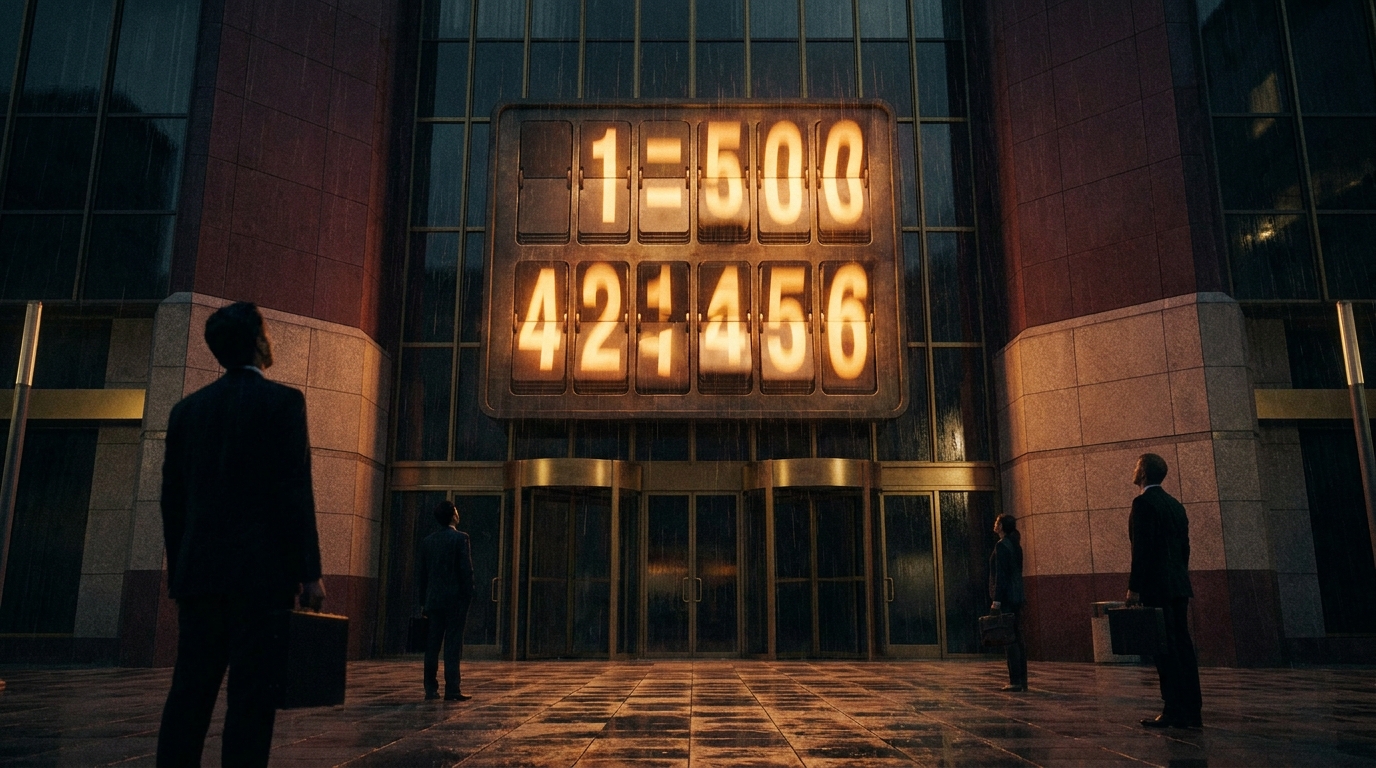
The aggregate number is abstract; the per-minute number is not. In 2024 the research priced downtime at $9,000 per minute - about $540,000 an hour. The 2026 edition puts it at $15,000 per minute - roughly $900,000 an hour. Average annual lost revenue from downtime nearly doubled, from $49 million to $95 million per organization, and the 2026 report adds a number for the board: stock prices decline 3.4 percent on average after a downtime event.
$15,000 a minute is roughly $900,000 an hour. The 2024 report also found downtime carried an average of $22M a year in regulatory fines on top of lost revenue.
What has not changed: the cause
Here is the detail that should reframe the whole conversation. The 2024 report broke downtime into two buckets - 56 percent of incidents traced to security incidents, 44 percent to application or infrastructure issues - and found that human error was the number one cause in both categories. Somebody pushed a bad config. Somebody clicked the phishing link. Somebody approved, or never actually reviewed, the change that took production down. Two years and $200 billion of growth later, nothing in the 2026 findings suggests that root cause has moved.
What the 2026 edition does show is where the response is going: organizations now spend a median of $24.5 million a year on AI aimed at downtime prevention. And yet 47 percent of organizations admit their customers often detect degradation before they do, and only 38 percent consistently identify root causes at all.
Median annual AI spend aimed at downtime prevention: $24.5M per organization.
The AuthorityGate take
Follow the logic of Splunk's own numbers. The leading cause of downtime is human error - a bad change, an unreviewed update, a mistaken approval. The industry's answer has been to detect the resulting fire faster: more telemetry, more dashboards, now $24.5 million a year of AI watching production. But detection starts the clock at $15,000 a minute. Prevention stops it from starting.
Prevention has to move upstream, to the moment a change is approved. That is what change validation does: every change - human, pipeline, or AI agent - passes through gates that check it against policy, score its risk, and route the consequential ones to a named human before production, which is also the cheapest form of business continuity there is. A gate that catches one bad change per year pays for itself in the first hour it prevents.
The most expensive sentence in the 2026 report is the quiet one: nearly half of organizations learn about their own outages from their customers. That is what a detection-first strategy looks like at maturity - world-class at measuring the damage, still surprised by the cause. The $600 billion question is not how fast you can see downtime. It is what stood between the change that caused it and production. For most of the Global 2000, the honest answer is still: nothing.
Sources
Go deeper
Every agent action, validated before it takes effect
AuthorityGate's newsletter breaks down real AI incidents and the governance failures behind them. Our configurable 8-gate validation model is how organizations keep a named human accountable for what their AI actually does.