Listen to this article
At Dell Technologies World in May, Dell announced the first all-flash PowerProtect Data Domain appliance, and the engineering numbers are genuinely impressive: up to 4x faster data restores and 2x faster replication than its predecessor, with up to 65:1 data reduction, 40 percent less rack space, and up to 80 percent power savings. Immutability, encryption, and a hardware root of trust are built in. Many of the environments we service run Dell data protection gear, and this is a real upgrade, not a spec-sheet shuffle.
But the number that deserves the most attention is a quieter one: up to 2.8x faster analytics to validate data integrity inside a PowerProtect Cyber Recovery vault.
Think about what that validation workload is for. A Cyber Recovery vault holds an isolated, immutable copy of your data, and the analytics that run inside it exist to answer one question: is the copy clean, or did something that reached production - ransomware, a corrupting change, a poisoned update - make it into the vault too? Dell just put that question on flash because customers need the answer faster.
The efficiency case writes itself. The strategy case is the interesting one.
The operational math for the appliance is straightforward - the same protection footprint in less space, on less power:
Alongside up to 65:1 data reduction, with immutability, encryption, and a hardware root of trust built in.
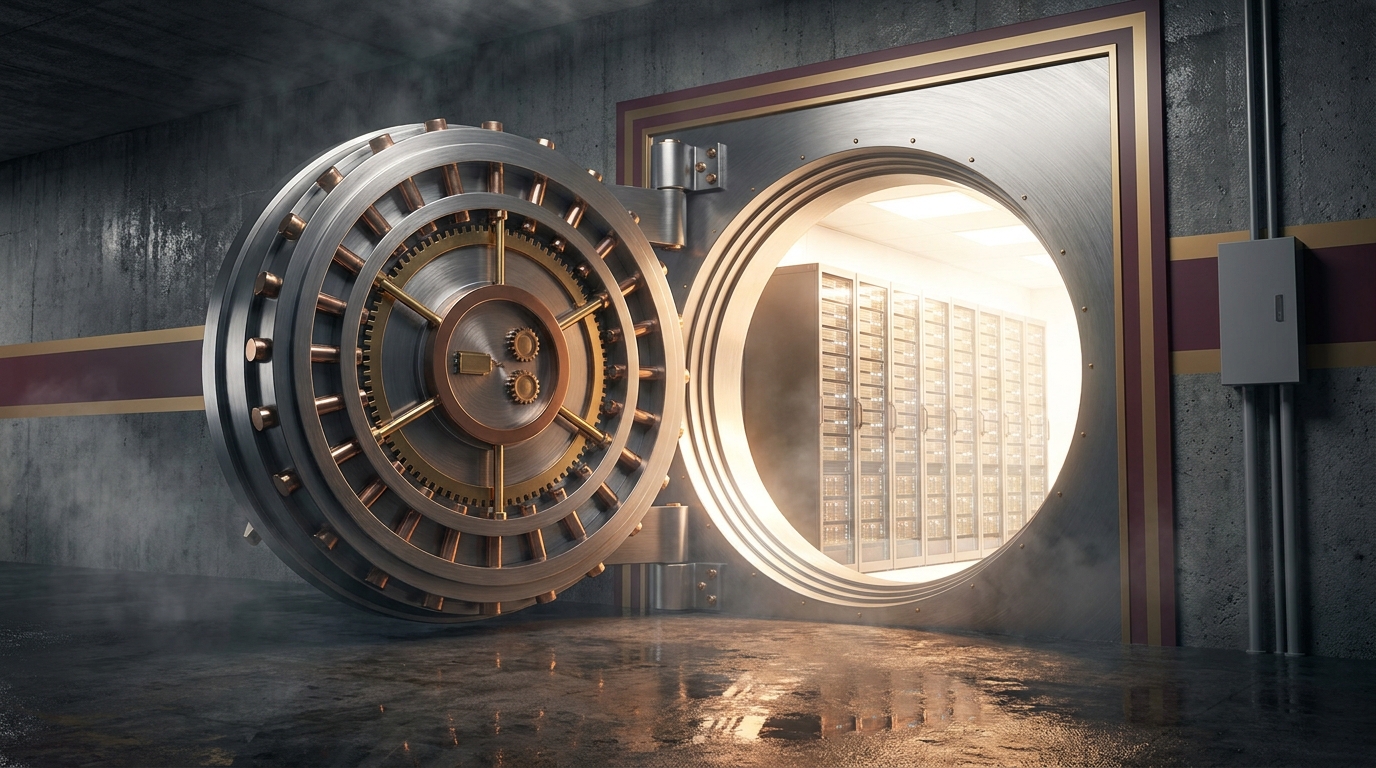
What the strategy signals is more revealing than what the hardware does. The industry's largest infrastructure vendor just spent flash money making it faster to check whether vaulted data is poisoned. That investment only makes sense under one assumption: that anything reaching production may be poison, and you will find out after it lands. The vault, the air gap, the immutable copy, the 2.8x analytics - the entire architecture is a bet that the bad change already got through.
The vault exists because something unvalidated reached production. Every hour spent validating vaulted data is spent on the consequence of a change nobody gated.

Recovery is the last line. Validation is the first.
Everything in a cyber vault runs after the fact: after the change landed, after the damage spread, after someone declared a disaster. Even at 2.8x speed, vault analytics can only tell you what you lost and which copy is safe to restore - forensics, not prevention. The stronger position is upstream: validate the change before it needs a vault. Every change headed for production - human, pipeline, or AI agent - passes validation gates that check it against policy, score its risk, and hold the consequential ones for a named human. The poisoned update, the corrupting config, the encrypting payload riding a legitimate change window: the gate is where those get caught while they are still cheap.
The AuthorityGate take
Keep the vault. We mean that without irony - defense in depth is real, recovery is the last line for a reason, and we would tell any customer running Dell data protection that this generation is worth a look. Nothing upstream removes the need for a clean, isolated copy of your data.
But notice the asymmetry the market has priced in. Post-disaster validation now merits all-flash hardware; pre-production validation, at most organizations, is still a change ticket and a hope. If checking data after an attack is worth flash money, then gating the change before it lands is worth more - it is the same validation instinct, applied where it can still prevent the disaster instead of measuring it. That is what Keystone is: an eight-gate pipeline standing in front of production, so the vault stays what it should be - the copy you never had to open, and your continuity plan's backstop rather than its centerpiece.
Dell's new appliance makes the last line of defense faster, and that is worth applauding. Just do not let it define where validation lives. The organizations that will never benchmark their vault-scan times are the ones that stopped the poison at the gate.
Go deeper
Every agent action, validated before it takes effect
AuthorityGate's newsletter breaks down real AI incidents and the governance failures behind them. Our configurable 8-gate validation model is how organizations keep a named human accountable for what their AI actually does.